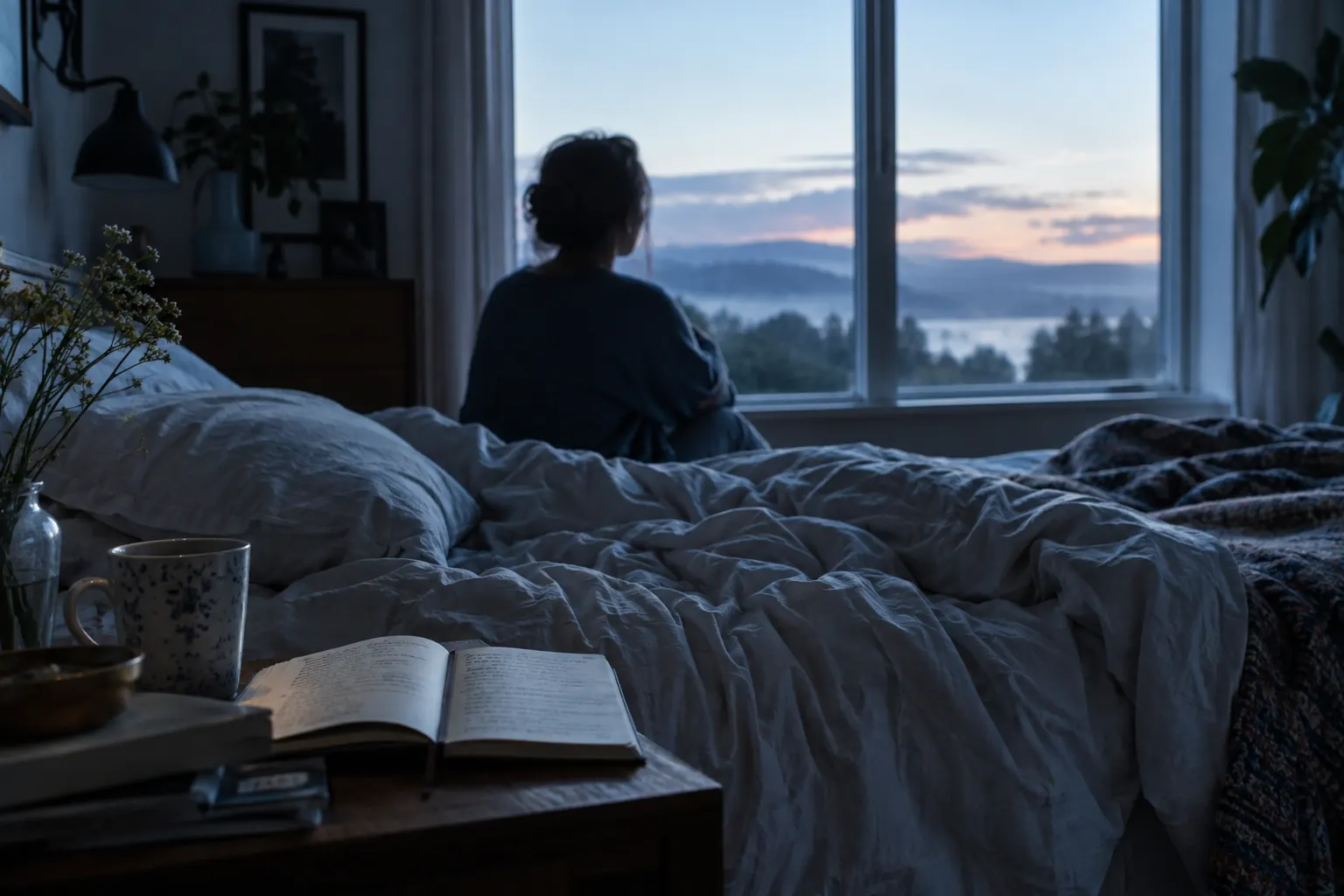
You arrive home after two days filled with travel, conversation and a late night. Then you dream you are back at a familiar station, searching for a door that keeps moving. The scene can feel meaningful when you wake. It can also simply feel strange.
A useful response is curiosity without certainty. Dream imagery is personal. A train, a lost bag or an unfamiliar house will not carry the same associations for everyone. You can notice what the dream brings up without declaring that it predicts anything.
Start with the feeling, not a dictionary entry
Before looking up symbols, write down what happened and how you felt. Were you excited, embarrassed, relieved or frustrated? Did the dream place you with people you had just seen, or in a setting from another period of life? A few lines written soon after waking preserve the details that fade quickest.
Next, note what made the previous day unusual. New places, an interrupted routine, a long drive or an intense conversation may all appear in dreams in altered form. The connection may be obvious, faint or nonexistent. There is no need to force a tidy explanation.
For people who enjoy comparing interpretations, resources about dream symbolism can offer prompts for reflection. Treat any symbolic reading as a starting question rather than a verdict. Your own associations and circumstances give the image its context.
Three questions that open the scene
First: what stood out? A dream about missing a performance might really leave you thinking about the friend who waited beside you. The detail you remember is often more useful than a plot summary.
Second: where did your body seem to be in the dream? Were you rushing, hiding, carrying something heavy or finally sitting down? This is not a diagnosis. It is a way to notice the emotional texture of an experience that may have been too busy to process while it happened.
Third: what would you change if you told the dream as a short story? Perhaps you would ask for directions sooner. Perhaps you would leave the crowd and find a quiet place. That imaginative revision can point toward a practical preference for the next weekend.
Common weekend images, handled gently
A crowded room can recall an enjoyable event or a draining one. A missing ticket can resemble the mundane fear of being unprepared. A familiar dog in an unfamiliar landscape may reflect a sense of companionship. These possibilities are deliberately broad because fixed one-line meanings are rarely helpful.
Sometimes an image is just an image. You saw an unusual staircase at a museum; your sleeping mind used a staircase. There is no benefit in interrogating every object. Keep the observations that help you understand your week and let the rest go.
A small journaling method
Set a timer for five minutes. Write a scene title, three sensory details, the feeling on waking and one question you would like to keep. Then close the notebook. If you return in a week, you may notice that what first felt dramatic now feels ordinary. That change is interesting in itself.
If the dream is distressing or sleep problems persist, seek guidance from a qualified health professional. An editorial reflection cannot assess a health concern. A restful evening routine and a lower-pressure next day may be enough for an isolated vivid dream, but personal support is available when you need more.
Let the weekend leave a trace
The point is not to decode yourself perfectly. It is to notice which experiences stayed with you. Perhaps the dream brings back the joy of a new place. Perhaps it tells you that next time you would like a slower schedule. The slow city-day itinerary and our rainy-day reset offer different ways to make space for that thought.
Dreams are one more part of an ordinary life: sometimes funny, sometimes unsettling, often vivid for a moment and then gone. A few notes can turn the lingering feeling into a clearer question, without pretending that one symbol has a universal answer.
When someone else's interpretation doesn't fit
A friend might hear your dream and immediately tell you that water means change, or a closed door means a missed opportunity. You are allowed to listen politely and disagree. The important detail may be that you were laughing as you opened the door, or that the water reminded you of a lake you visited as a child.
Consider two readings side by side. One can be symbolic; the other can be literal memory from the day. You do not need to choose between them. If neither feels useful, the dream can simply remain a curious story.
Dream sharing as conversation
If you tell someone a dream, describe the scene before explaining it. Invite their reaction only if you want it. Shared dreams can lead to funny recollections or reveal what part of a weekend stayed vivid for each person. But other people do not owe you an analysis, and you do not owe them a confession.
A private notebook is often the gentlest place for an unsettling image. Date the entry, keep it brief and let it sit. Re-reading later may show that an intense feeling passed on its own.
One practical thing to take away
If a dream repeatedly returns you to rushing for a train, ask whether your waking schedule has enough margin. If it repeatedly returns you to a peaceful place, ask whether you can visit a similar setting. These are prompts, not conclusions. You can use an image to ask a better question without letting it make decisions for you.
Separate an interesting image from a demand to act
A memorable dream can create a strong urge to change a plan or contact someone immediately. Give the feeling room to settle. Write down the image, eat breakfast and revisit it later. You may find that the emotion points to a real concern worth discussing. You may also discover that it was a passing scene assembled from recent experiences.
If a dream reminds you of a difficult relationship, consider what you already know from waking life. A dream cannot tell you another person's thoughts. It can, however, reveal a question you have been avoiding or a wish for a different kind of conversation.
Make the practice light enough to continue
Keep a pencil and notebook nearby if you enjoy remembering dreams. A single phrase is enough on most mornings. You do not need to record every scene or turn each one into a lesson. Curiosity becomes less helpful when it turns sleep into another assignment. Some nights deserve to remain simply nights.
Give the waking day its own voice
A dream may offer a mood, but the morning can answer it differently. Make a cup of tea, open a window or talk to someone whose company feels grounding. Notice whether the scene still matters after ordinary life begins. If it does, a short journal entry can hold it. If it does not, there is nothing to preserve.
The most helpful interpretations tend to remain open-ended. 'I felt rushed this weekend' leads to a practical change. 'This dream proves I must cancel next month's trip' gives a nighttime image more authority than it can carry. Keep your own judgment in the room.